Agentic AI Implementation: A Practical Roadmap for Business Teams
TL;DR: Agentic AI implementation is the engineering of a system in which an AI model selects and uses tools to complete a bounded business task. Choose one action and name its business owner. More agents do not automatically improve reliability; each additional handoff introduces state and coordination to test.
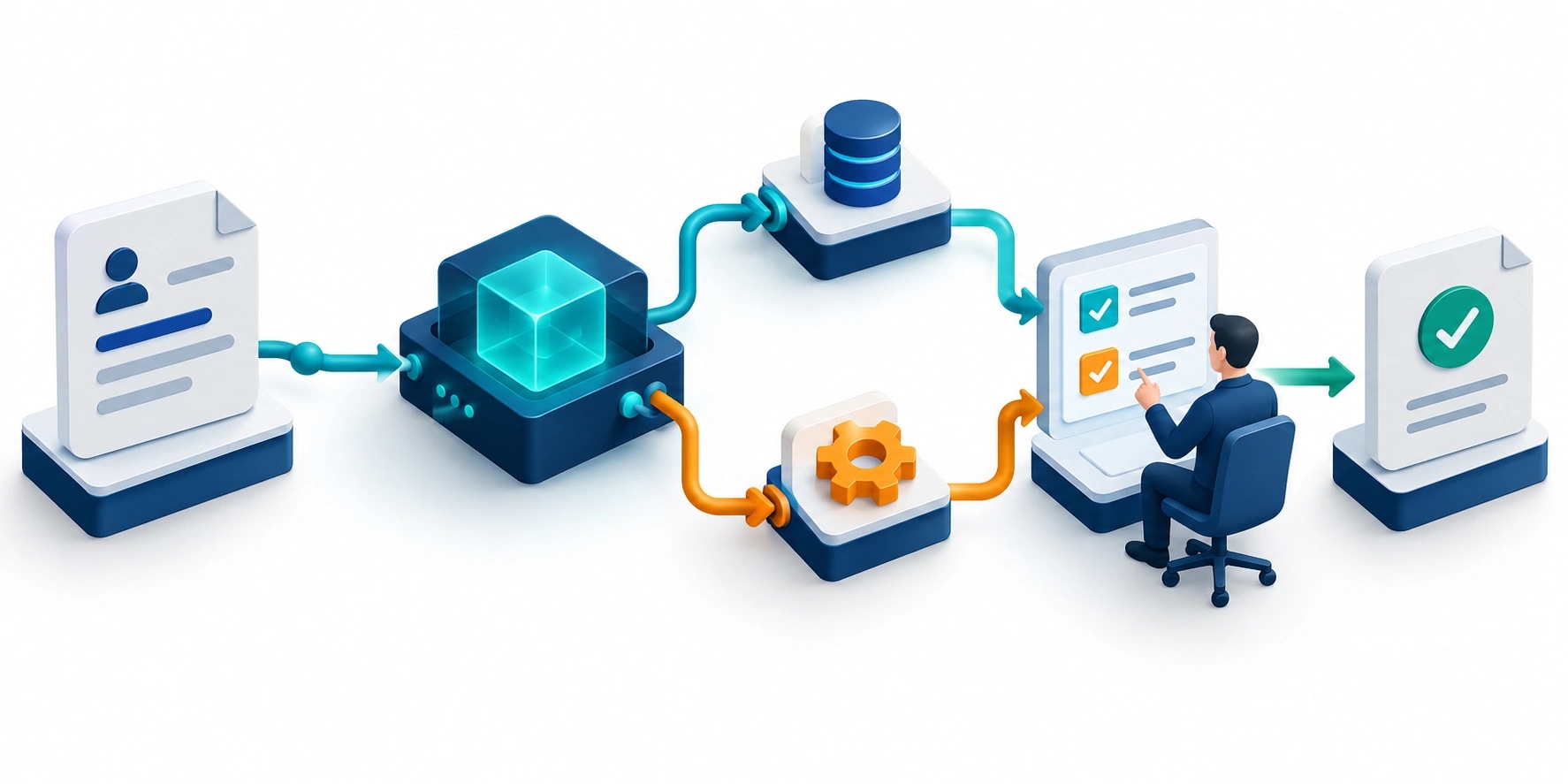
Original AI-generated editorial illustration; it depicts a concept rather than a client deployment or product screenshot.
Introduction
An assistant that writes a useful answer is different from a system that changes an order or creates a service ticket. The second system needs explicit authority, dependable tools and a way to recover when a step fails. Begin with the business action and work backwards to the model. Here is how to evaluate agentic AI implementation against that business need.
What Is agentic AI implementation?
Agentic AI implementation is the engineering of a system in which an AI model selects and uses tools to complete a bounded business task.
A workflow can appear successful while updating the wrong customer record. Tool errors, unavailable systems and ambiguous requests need different recovery paths. Business owners need evidence of completed work, rather than fluent summaries.
More agents do not automatically improve reliability; each additional handoff introduces state and coordination to test. The scope should make this distinction clear before the team commits to a solution.
Technical context: Anthropic distinguishes predefined workflows from agents that select their own next steps. Anthropic: Building effective agents
Why agentic AI implementation Matters
- A workflow can appear successful while updating the wrong customer record.
- Tool errors, unavailable systems and ambiguous requests need different recovery paths.
- Business owners need evidence of completed work, rather than fluent summaries.
How to Evaluate and Implement agentic AI implementation
Decide whether the process needs an agent
Use ordinary workflow code when the route is stable and the inputs are structured. A model can classify an incoming request without controlling the entire process. Give it planning responsibility only when selecting the next step depends on information discovered along the way. A fixed approval chain does not become more useful simply because an agent can recreate it. Write down the simplest viable architecture before choosing an orchestration framework.
Make tools narrow and accountable
Expose actions such as finding an order or drafting a replacement request instead of unrestricted database access. Validate identifiers, required fields and account permissions outside the language model. Separate read tools from write tools, and show the user the proposed change before consequential execution. Every write should return a durable receipt that the application can verify. The model's statement that it finished is insufficient evidence of completion.
Design an exit for every loop
Set limits on execution time, tool calls and spending. Persist the task state so a timeout does not restart a completed payment or shipment. Route missing permissions, contradictory records and uncertain customer intent to an accountable person. Test the agent with unavailable services and misleading documents as well as normal requests. A bounded agent that reliably hands off difficult cases is often more valuable than an apparently autonomous demo.
Compare the available approaches
| Approach | Suitable starting point | Main limitation or responsibility |
|---|---|---|
| Fixed workflow | Stable sequence and known conditions | Explicit business-rule maintenance |
| AI-assisted workflow | Unstructured input within a controlled route | Validate classification and extracted fields |
| Tool-using agent | Next step depends on newly discovered context | Bound authority, cost and recovery |
A practical example
Consider a hypothetical distributor receiving delivery-change requests. The first release identifies the order, retrieves dispatch status and prepares a proposed response. It can update an address only before dispatch and after an authorised user confirms the change. If dispatch status cannot be retrieved, it creates a review task instead of guessing. The release decision depends on correct transitions, traceable approvals and safe interruption, not on how human the conversation sounds.
An acceptance test worth running
Submit a delivery-change request after the dispatch system becomes unavailable. The assistant should retain the request, avoid an unverified update and route the unresolved case to the named owner. Then restore the service and check that resumption does not apply the same change twice. Keep the original request, tool arguments, approval and resulting record together so a reviewer can reconstruct the decision.
What to measure
Track verified task completion, inappropriate action attempts, handoff quality, time to resolution and operating cost per completed task.
Use a representative baseline and record the conditions of the comparison. Agree who reviews failures and what evidence is needed before expanding the scope. For a broader view of the related delivery work, explore Webbies services.
Practical Steps for agentic AI implementation
- Choose one action and name its business owner.
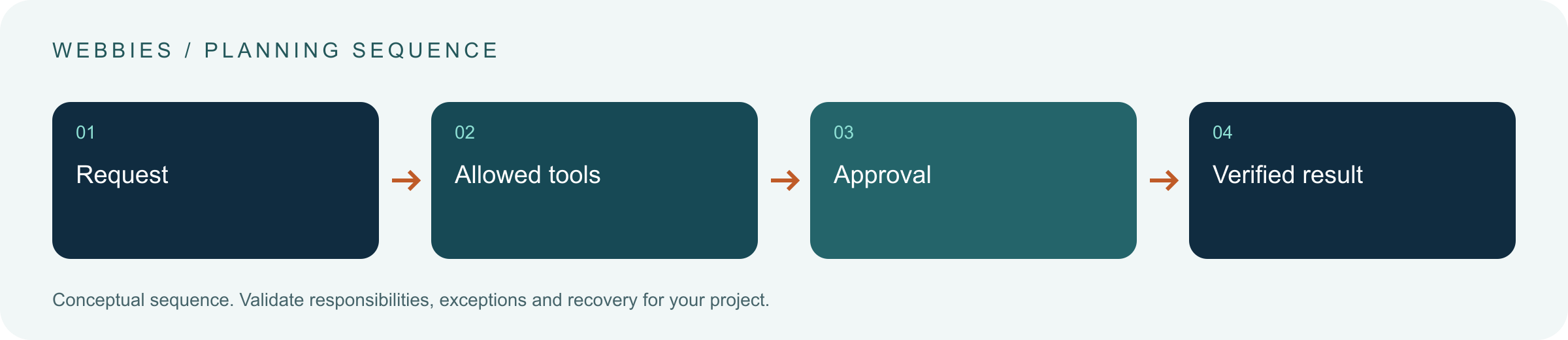
- Map allowed tools, permissions and irreversible decisions.
- Build evaluation cases from real, sanitised requests and exceptions.
- Launch with review, inspect failures and widen authority only after evidence supports it.
Prepare a useful project brief
| Decision | What to establish |
|---|---|
| Audience | CTOs and operations leaders evaluating tool-using AI |
| First boundary to agree | Choose one action and name its business owner. |
| Evidence of useful performance | Track verified task completion, inappropriate action attempts, handoff quality, time to resolution and operating cost per completed task. |
| Estimate dependency | Tool integration, access control, evaluation coverage and support ownership usually require more scoping than the chat interface. |
Bring sample inputs and an example of an exception to the first discussion. Separate confirmed requirements from assumptions, and identify who can supply missing information. The brief should let a delivery team explain what it needs to investigate before making a detailed commitment.
Common Mistakes to Avoid
- Giving a model broad credentials to simplify a prototype.
- Treating a successful conversation as proof that a transaction completed.
- Removing human review before measuring exception handling.
Frequently Asked Questions
What does agentic AI implementation mean in a business project?
Agentic AI implementation is the engineering of a system in which an AI model selects and uses tools to complete a bounded business task.
How should a team begin evaluating enterprise AI agents?
Choose one action and name its business owner. Map allowed tools, permissions and irreversible decisions.
How do we measure whether AI agent development is useful?
Track verified task completion, inappropriate action attempts, handoff quality, time to resolution and operating cost per completed task.
What affects the cost or timeline of agentic AI implementation?
Tool integration, access control, evaluation coverage and support ownership usually require more scoping than the chat interface. A delivery estimate should follow a review of these dependencies.
What is a common misconception about agentic AI implementation?
More agents do not automatically improve reliability; each additional handoff introduces state and coordination to test.
Conclusion
A useful agent completes a bounded task with verifiable authority, evidence and recovery. Expand its responsibility only when the observed workflow supports that decision. Discuss a bounded AI-agent pilot with Webbies.
Sources and further reading
- Anthropic: Building effective agents — primary technical reference, checked during research on 30 October 2026.
Discuss your project
Discuss a bounded AI-agent pilot. Share the current workflow, intended users, existing systems and the decision you need to make; the next step can be a 20–30 minute discovery discussion.