
AEO for B2B Websites: Make Expertise Easy to Find and Understand
TL;DR: AEO for B2B websites is the practice of making business expertise clear, well-structured and easy to retrieve when people or answer systems seek a specific answer. Collect specific questions from buyers and search evidence. Answer-engine formatting does not create a guarantee of AI extraction, citation or search ranking.
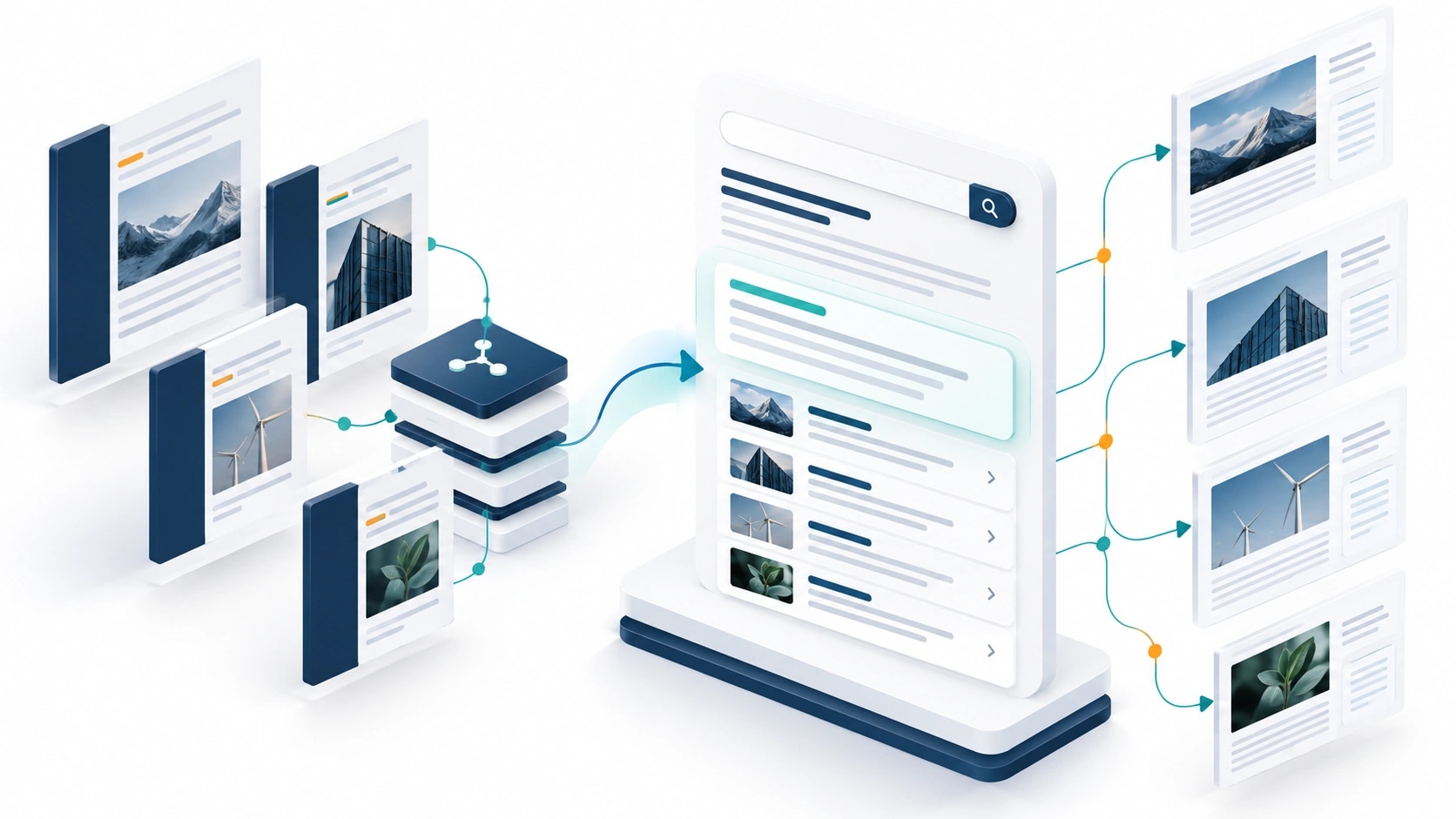
Original AI-generated editorial illustration; it depicts a concept rather than a client deployment or product screenshot.
Introduction
Buyers ask detailed questions about suitability, integration and delivery risk. A useful business website answers those questions directly and makes its evidence easy to inspect. Improving answer readiness starts with helpful, accessible information, rather than a special file or schema promising placement inside AI-generated results. Here is how to evaluate AEO for B2B websites against that business need.
What Is AEO for B2B websites?
AEO for B2B websites is the practice of making business expertise clear, well-structured and easy to retrieve when people or answer systems seek a specific answer.
Broad sales claims fail to answer specific buying questions. Disconnected pages obscure the relationship between services and expertise. Unsupported claims weaken credibility even when formatting is polished.
Answer-engine formatting does not create a guarantee of AI extraction, citation or search ranking. The scope should make this distinction clear before the team commits to a solution.
Technical context: Google states that established SEO foundations remain relevant to AI search features; inclusion is not guaranteed. Google Search Central: AI features and your website
Why AEO for B2B websites Matters
- Broad sales claims fail to answer specific buying questions.
- Disconnected pages obscure the relationship between services and expertise.
- Unsupported claims weaken credibility even when formatting is polished.
How to Evaluate and Implement AEO for B2B websites
Answer one recognisable question per page
Choose a search intent tied to a real buyer problem. Give the direct answer near the beginning, then explain conditions, tradeoffs and next steps. Use descriptive headings and tables when they clarify a decision. Avoid repeating the same service pitch across dozens of near-identical city or keyword pages. Distinct pages should resolve distinct questions and link to deeper material when the scope changes.
Make expertise and evidence inspectable
Use approved case information, named source links and concrete explanations of implementation. Distinguish hypothetical examples from client results. Connect articles to foundational service pages and relevant next steps. Ensure important content is available as text rather than only inside images or interactions. Structured data should accurately describe visible content; it is not a substitute for factual support or a clear page.
Measure discovery without inventing attribution
Monitor the search reporting actually available to the site and connect enquiries to useful landing pages where possible. Review search queries and customer questions to identify missing explanations. AI answers and their source selections can vary, so one observed citation is not a stable ranking. Improve content based on reader needs and evidence. Avoid guarantees of AI inclusion, indexing or traffic from a particular heading pattern.
Compare the available approaches
| Approach | Suitable starting point | Main limitation or responsibility |
|---|---|---|
| Service page | Explain the offer and fit | Needs relevant supporting evidence |
| Decision guide | Resolve a buyer comparison | Needs distinct intent and tradeoffs |
| Case study | Show approved work and scope | Needs verified publication rights |
A practical example
A hypothetical software studio replaces a vague automation page with a practical guide explaining which tasks suit rules, AI assistance or agents. The article includes an example, a comparison and links to relevant services. A separate integration guide covers deeper implementation details. The goal is clearer discovery and qualified conversations, not a claim that answer-first formatting guarantees an AI citation.
An acceptance test worth running
Ask a reviewer unfamiliar with the company to find a direct answer, its supporting evidence and the next relevant service page. Inspect whether important information remains available as text. Compare the page with existing content for overlapping intent. A clear structure should make expertise easier to assess without implying that a particular answer system must cite or rank the page.
What to measure
Track useful query coverage, indexed discovery, engaged reading and relevant enquiries with the attribution available.
Use a representative baseline and record the conditions of the comparison. Agree who reviews failures and what evidence is needed before expanding the scope. For a broader view of the related delivery work, explore Webbies services.
Practical Steps for AEO for B2B websites
- Collect specific questions from buyers and search evidence.
- Map each question to a distinct, useful page.
- Write direct answers with evidence and relevant links.
- Review discovery and enquiry quality, then update gaps.
Prepare a useful project brief
| Decision | What to establish |
|---|---|
| Audience | B2B marketing and website teams |
| First boundary to agree | Collect specific questions from buyers and search evidence. |
| Evidence of useful performance | Track useful query coverage, indexed discovery, engaged reading and relevant enquiries with the attribution available. |
| Estimate dependency | Research depth, approved evidence, information architecture and content maintenance determine scope. |
Bring sample inputs and an example of an exception to the first discussion. Separate confirmed requirements from assumptions, and identify who can supply missing information. The brief should let a delivery team explain what it needs to investigate before making a detailed commitment.
Common Mistakes to Avoid
- Promising AI citations from special markup.
- Publishing duplicated location pages.
- Using FAQs to repeat unsupported sales claims.
Frequently Asked Questions
What does AEO for B2B websites mean in a business project?
AEO for B2B websites is the practice of making business expertise clear, well-structured and easy to retrieve when people or answer systems seek a specific answer.
How should a team begin evaluating answer engine optimization?
Collect specific questions from buyers and search evidence. Map each question to a distinct, useful page.
How do we measure whether B2B AI search visibility is useful?
Track useful query coverage, indexed discovery, engaged reading and relevant enquiries with the attribution available.
What affects the cost or timeline of AEO for B2B websites?
Research depth, approved evidence, information architecture and content maintenance determine scope. A delivery estimate should follow a review of these dependencies.
What is a common misconception about AEO for B2B websites?
Answer-engine formatting does not create a guarantee of AI extraction, citation or search ranking.
Conclusion
Answer readiness comes from useful explanations, accessible information and inspectable evidence. Build distinct pages for real questions while avoiding promises about AI citation or rankings. Review the information architecture of a B2B website with Webbies.
Sources and further reading
- Google Search Central: AI features and your website — primary technical reference, checked during research on 30 October 2026.
Discuss your project
Review the information architecture of a B2B website. Share the current workflow, intended users, existing systems and the decision you need to make; the next step can be a 20–30 minute discovery discussion.