
Offline-First Mobile App: Design Sync for Real Working Conditions
TL;DR: An offline-first mobile app supports critical tasks through local data and synchronises with remote systems when connectivity becomes available. List critical tasks and offline limits. Offline-first does not guarantee freshness; it makes availability and update status explicit.

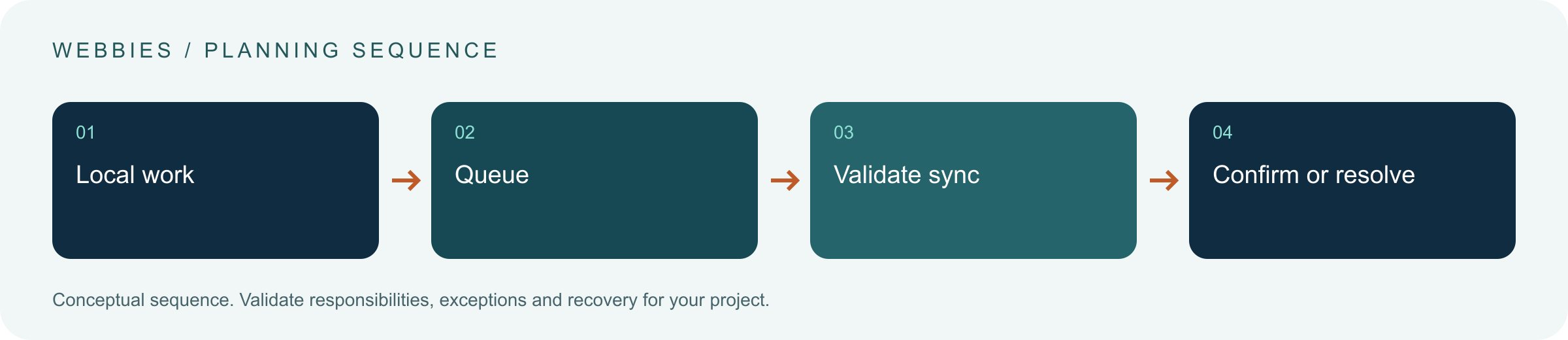
Original AI-generated editorial illustration; it depicts a concept rather than a client deployment or product screenshot.
Introduction
A dropped connection should not force a worker to re-enter a visit. Saving locally solves part of that problem, but the server may change while the device is offline. Design the saved state, later validation and potential conflict so the user knows what happened to the work. Here is how to evaluate offline-first mobile app against that business need.
What Is offline-first mobile app?
An offline-first mobile app supports critical tasks through local data and synchronises with remote systems when connectivity becomes available.
Connectivity varies across real workplaces. Local writes may conflict with server changes. Saved and accepted are different business states.
Offline-first does not guarantee freshness; it makes availability and update status explicit. The scope should make this distinction clear before the team commits to a solution.
Technical context: Android's architecture guide treats local and network data as explicit offline-first design concerns. Android Developers: Build an offline-first app
Why offline-first mobile app Matters
- Connectivity varies across real workplaces.
- Local writes may conflict with server changes.
- Saved and accepted are different business states.
How to Evaluate and Implement offline-first mobile app
Choose offline tasks explicitly
Separate cached reading, local drafts and accepted transactions. A salesperson may draft an order without current stock or credit confirmation. Define the local source for the interface and the server authority for business acceptance. Make this boundary visible. Offline support cannot safely imply that every operation finishes without current information from the governing system.
Agree conflict rules
Decide how simultaneous edits are resolved. Last-write-wins may fit a preference but be unsuitable for approved pricing or inspection evidence. Use versions and stable request identifiers where needed. Test deletions, revoked accounts and discontinued products. These are business decisions that require product ownership rather than a generic synchronisation library default.
Make recovery durable
Preserve queued work across restarts. Show pending, syncing, synced and rejected states with an explanation and correction path. Consider local data protection, session expiry and device loss. Test long outages and large media on representative hardware. A spinner cannot explain whether a record exists, whether the user should retry or whether the business accepted it.
Compare the available approaches
| Approach | Suitable starting point | Main limitation or responsibility |
|---|---|---|
| Online only | Current server view | Stops without connectivity |
| Cached reads | Information remains available | Writes need another route |
| Offline writes | Capture during outages | Conflict and rejection design |
A practical example
A hypothetical sales app stores order drafts against a cached catalogue. Reconnection triggers account and availability checks. A discontinued item returns the preserved draft for correction. The app marks acceptance only when the business system confirms it, protecting the customer's expectation and the representative's ability to recover the work.
An acceptance test worth running
Edit a record on the device and server during a long disconnection. Restart the app before reconnection and then trigger sync. Check the agreed conflict behaviour rather than merely whether a request is sent. Revoke the account during a second test. Local work, current authority and final server acceptance should remain distinct, understandable states with a documented recovery route.
What to measure
Measure preserved drafts, successful sync, duplicate prevention and conflict recovery.
Use a representative baseline and record the conditions of the comparison. Agree who reviews failures and what evidence is needed before expanding the scope. For a broader view of the related delivery work, explore Webbies services.
Practical Steps for offline-first mobile app
- List critical tasks and offline limits.
- Define local data and server acceptance.
- Agree conflict rules with the process owner.
- Test outages, restarts and rejected sync.
Prepare a useful project brief
| Decision | What to establish |
|---|---|
| Audience | teams building field and branch applications |
| First boundary to agree | List critical tasks and offline limits. |
| Evidence of useful performance | Measure preserved drafts, successful sync, duplicate prevention and conflict recovery. |
| Estimate dependency | Offline writes, attachments, conflict policies and local-security requirements drive effort. |
Bring sample inputs and an example of an exception to the first discussion. Separate confirmed requirements from assumptions, and identify who can supply missing information. The brief should let a delivery team explain what it needs to investigate before making a detailed commitment.
Common Mistakes to Avoid
- Calling queued requests accepted.
- Overwriting every conflict silently.
- Testing only brief outages.
Frequently Asked Questions
What does offline-first mobile app mean in a business project?
An offline-first mobile app supports critical tasks through local data and synchronises with remote systems when connectivity becomes available.
How should a team begin evaluating mobile data synchronization?
List critical tasks and offline limits. Define local data and server acceptance.
How do we measure whether offline mobile app architecture is useful?
Measure preserved drafts, successful sync, duplicate prevention and conflict recovery.
What affects the cost or timeline of offline-first mobile app?
Offline writes, attachments, conflict policies and local-security requirements drive effort. A delivery estimate should follow a review of these dependencies.
What is a common misconception about offline-first mobile app?
Offline-first does not guarantee freshness; it makes availability and update status explicit.
Conclusion
Offline capability should preserve work while explaining its acceptance state. Define conflict and recovery behaviour before promising uninterrupted field productivity. Review an offline mobile architecture with Webbies.
Sources and further reading
- Android Developers: Build an offline-first app — primary technical reference, checked during research on 30 October 2026.
Discuss your project
Review an offline mobile architecture. Share the current workflow, intended users, existing systems and the decision you need to make; the next step can be a 20–30 minute discovery discussion.